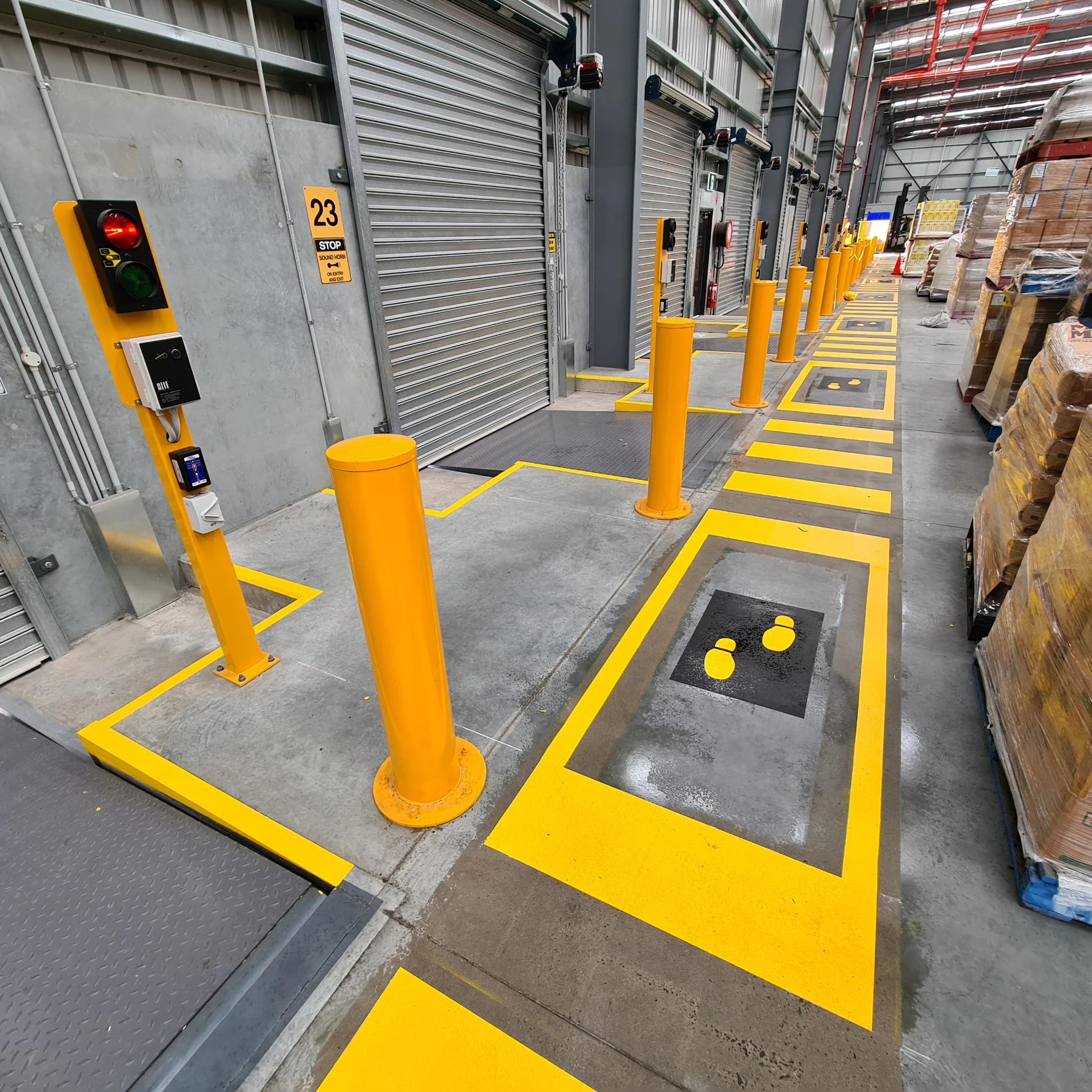
Why Pedestrian Safety Zones Matter
Warehouses are high-traffic environments where forklifts, pallet jacks, and heavy machinery operate alongside workers on foot. Without clearly defined pedestrian safety zones, the risk of serious accidents increases dramatically. Effective floor markings are one of the most important safety measures any warehouse can implement.
Key Elements of Warehouse Pedestrian Safety
Designated Walkways: Clearly marked pedestrian walkways separate foot traffic from vehicle zones. These are typically marked in green with yellow borders, creating high-visibility paths that workers can follow safely throughout the facility.
Pedestrian Crossings: At points where walkways intersect with vehicle lanes, zebra-style crossings alert both pedestrians and forklift operators to exercise caution. These crossings should be placed at logical points of foot traffic flow.
Exclusion Zones: Areas where pedestrians must not enter — such as loading bays, high-rack zones, and machinery operating areas — need bold hatching and warning markings to prevent accidental entry.
Australian Standards for Warehouse Markings
Warehouse floor markings in Australia must comply with several key standards:
- AS 1318 — Use of colour for safety identification, specifying yellow for caution/hazard areas and green for safe zones
- AS 4024 — Safety of machinery, covering minimum clearances and pedestrian exclusion zones
- WHS Regulations — Work Health and Safety requirements for traffic management in workplaces
Best Practices for Effective Zone Marking
Colour Coding: Use a consistent colour system across the facility. Green for pedestrian walkways, yellow for caution/hazard zones, red for fire equipment and emergency areas, and white for general traffic lanes.
Line Width: Walkway border lines should be at least 100mm wide for visibility. Hazard zones benefit from wider lines or filled colour areas for maximum impact.
Durability: Warehouse floors endure heavy traffic from forklifts and pallet jacks. Use high-performance floor paint or epoxy coatings that resist wear, chemicals, and tyre marks.
Bollard Protection: Complement floor markings with physical barriers like bollards at high-risk intersection points to prevent vehicles from entering pedestrian zones.
Common Mistakes to Avoid
- Using faded or worn markings that are no longer clearly visible
- Inconsistent colour coding that confuses workers
- Walkways that are too narrow for safe pedestrian movement
- Failing to mark loading dock approach zones
- Not updating markings when warehouse layout changes
The City Line Marking Approach
At City Line Marking, we work with warehouse managers to design comprehensive pedestrian safety systems. We assess your facility's traffic flow, identify high-risk areas, and create a marking plan that meets Australian standards while fitting your operational needs. Our durable epoxy and polyurethane coatings are built to withstand the toughest warehouse environments.