Why Speed Humps Are Essential
Speed humps are one of the most effective traffic calming measures available for car parks, private roads, and commercial properties. By physically forcing vehicles to slow down, they protect pedestrians, reduce accident severity, and improve overall safety in high-traffic areas.
Types of Speed Humps
Rubber Speed Humps: Modular rubber speed humps are the most popular choice for car parks and commercial properties. They're easy to install, highly durable, and can be removed or relocated if needed. Their black-and-yellow colour scheme provides excellent visibility.
Concrete Speed Humps: Permanent concrete humps are ideal for roads and long-term installations. They're extremely durable but require professional installation and are difficult to remove.
Asphalt Speed Humps: Built directly into the road surface, these provide a seamless appearance and are common on council roads. They require skilled construction and proper drainage planning.
Speed Cushions: Narrower than full-width humps, speed cushions allow emergency vehicles and buses to straddle them while still slowing regular traffic. They're ideal for shared-use roads.
Where to Install Speed Humps
- Car parks: Near pedestrian crossings, building entries, and pick-up/drop-off zones
- Warehouse yards: Along truck routes near loading docks and pedestrian areas
- School zones: Approaches to schools and near playground areas
- Residential complexes: Internal roads and visitor parking areas
- Shopping centres: Near trolley return areas and pedestrian-heavy zones
Installation Considerations
Spacing: Speed humps should be spaced appropriately to maintain reduced speed between them. For a 20km/h zone, spacing of 50-80 metres is typical.
Drainage: Humps must not block surface water drainage. Gaps at kerb edges or drainage channels should be incorporated into the design.
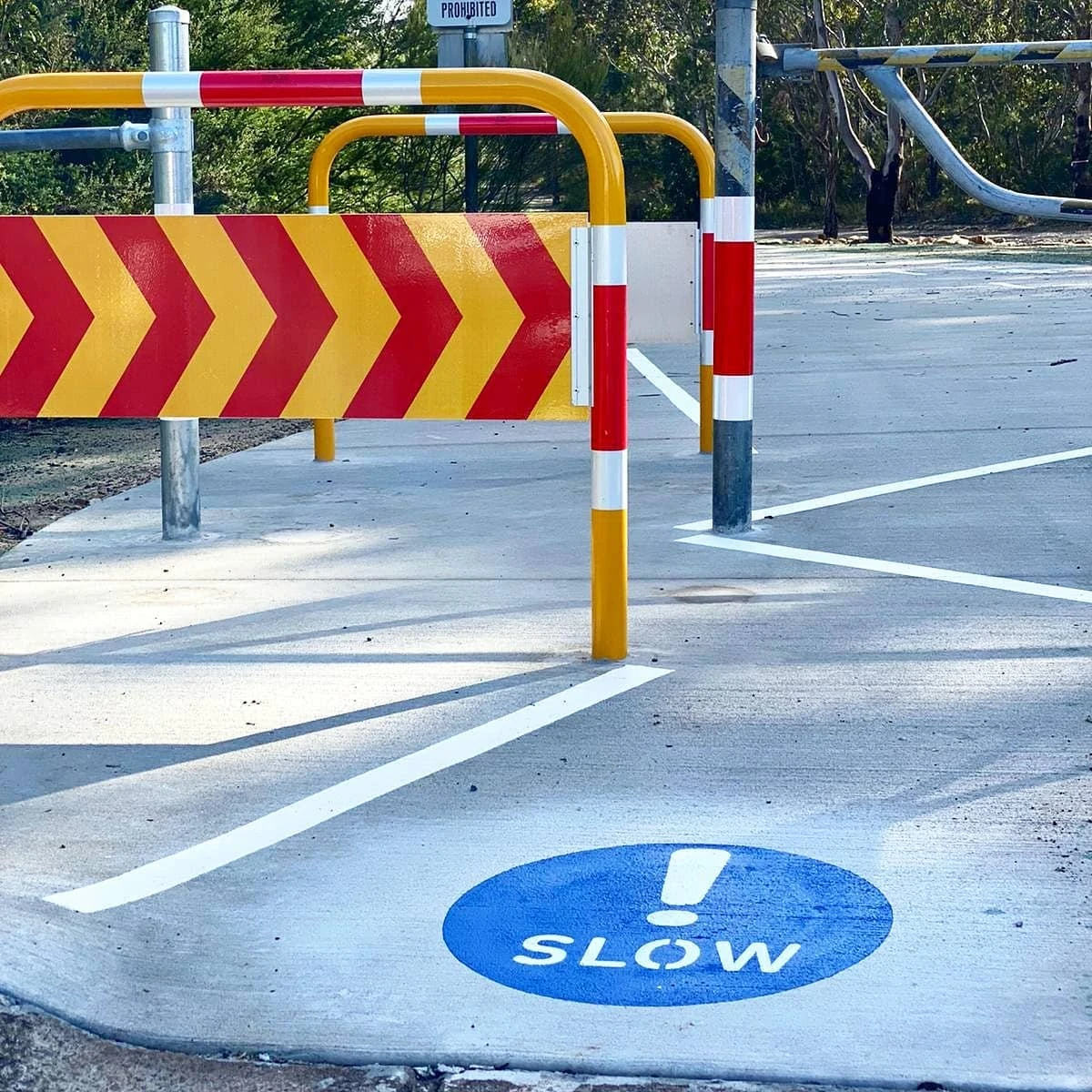
Signage: Warning signs and pavement markings must accompany speed humps to alert drivers. Yellow chevron markings on the hump itself improve visibility, especially at night.
Height Profile: Standard speed humps are typically 75-100mm high with a gentle rise profile. Steeper profiles create more aggressive speed reduction but can cause discomfort and vehicle damage.
Complementary Traffic Calming Measures
Speed humps work best as part of a broader traffic management strategy:
- Line marking: Speed limit markings, directional arrows, and pedestrian crossings
- Bollards: Physical barriers to protect pedestrian zones
- Signage: Speed limit signs, warning signs, and wayfinding
- Wheel stops: Prevent vehicles from overrunning parking bays
- Convex mirrors: Improve sightlines at blind corners
Australian Standards
Speed hump installations should comply with AS 2890.1 for car parks and local council requirements for roads. Key requirements include minimum visibility distances, appropriate signage, and proper surface marking of the humps themselves.
City Line Marking Speed Hump Solutions
We supply and install a range of rubber and concrete speed humps for commercial properties across Sydney. Our team handles everything from site assessment and product selection to professional installation and associated line marking — ensuring your traffic calming solution is effective, compliant, and built to last.